


© 2020-26 MedEx Ventures Co., Ltd.
Experience MedEx Seamless Care Delivery — 10% OFF on Your First Appointment - Use 'TRYMEDEX' Coupon Code on Checkout //////////////////////////////////// General Price List — Consultation: 750 THB | Home Lab Test Service Fee: 750 THB (FREE for Orders Over 5,000 THB)



Save up to 60% on prenatal genetic screening compared to Indian private hospitals. Complete cost breakdown, travel tips, and step-by-step process for expecting Indian families.
Transparent pricing — MedEx offers world-class prenatal screening at a fraction of Indian private hospital costs.
| Test Package | India (Private Hospital) | MedEx Bangkok (THB) | MedEx Bangkok (INR Approx.) |
|---|---|---|---|
| Basic / Essentials T21, T18, T13, Sex Chromosomes, Gender |
₹25,000 – ₹35,000 | ฿8,999 | ≈ ₹21,000 |
| Comprehensive / Pro + Mosaic T8/T9, T16, Additional Chromosomes |
₹35,000 – ₹45,000 | ฿14,999 | ≈ ₹35,000 |
| Twin Pregnancy T21, T18, T13, Gender (Natural & IVF) |
₹30,000 – ₹50,000 | ฿9,999 | ≈ ₹23,500 |
| Hotel / Home Collection | Varies / Often unavailable | ฿750 extra | ≈ ₹1,750 |
| Potential Savings | Up to 40–60% savings on the test itself | ||
* INR approximations based on exchange rates at the time of writing. Actual rates may vary. Indian hospital prices are approximate ranges for major private hospitals in metro cities.
Everything you need for a smooth, stress-free medical travel experience.
From booking in India to receiving results at home — here's the complete process.
Schedule your NIPT test through the MedEx website or via 24/7 WhatsApp (+66-639-980-005). No doctor's referral is needed. Choose your package (Essentials, Pro, or Twins) and select your preferred date.
Direct flights from major Indian cities take 3.5–5 hours. No visa needed for stays up to 60 days. Book a hotel near Sukhumvit 13 for convenience — or choose any hotel if you prefer home collection.
Walk into MedEx Neo Clinic on Sukhumvit 13 (open 8AM–10PM daily, walk-ins welcome). Or request a clinician to collect at your hotel for 750 THB extra — they arrive within 1–3 hours. No fasting required.
While your sample undergoes NGS analysis at the ISO 15189 certified laboratory, explore Bangkok's temples, markets, food scene, and shopping — or simply fly home.
Your detailed prenatal report is delivered directly to your email. Access it from anywhere in India. Share with your obstetrician for follow-up, or arrange a teleconsultation with MedEx doctors.
Even with flights and hotel, the total can be comparable to or less than a NIPT test alone in an Indian private hospital.
For the Pro package (₹35,000), add ₹14,000 to the total. For hotel collection, add ≈₹1,750. Prices are approximate estimates and may vary with exchange rates, season, and personal choices.
Everything you need to know before flying from India to Bangkok for your NIPT test.
Cost, travel, and process questions answered for expecting Indian families.
Book your affordable NIPT test at MedEx Bangkok. 24/7 WhatsApp support for Indian patients. Results in 5–7 days, delivered to your email.
Book NIPT Test Now →Thailand has become one of the most popular medical tourism destinations for Indian families seeking affordable prenatal genetic screening. With direct flights from major Indian cities, visa-free entry, and world-class healthcare infrastructure, Bangkok offers a compelling alternative to expensive private hospital testing in India.
NIPT tests at leading Indian private hospitals typically cost between ₹25,000 and ₹45,000. At MedEx Bangkok, the same advanced Next-Generation Sequencing technology is available from 8,999 THB (approximately ₹21,000) for the Essentials package and 14,999 THB (approximately ₹35,000) for the comprehensive Pro package. Even when factoring in round-trip flights (₹12,000–₹22,000) and a short hotel stay (₹4,000–₹8,000), the total trip cost can be comparable to or less than the NIPT test alone in India.
Direct flights operate daily from Delhi, Mumbai, Chennai, Kolkata, Bengaluru, and Hyderabad to Bangkok's Suvarnabhumi Airport. Flight duration ranges from 3.5 to 5 hours. Indian passport holders enjoy visa-free entry for up to 60 days, eliminating the need for advance visa applications. MedEx Neo Clinic is located on Sukhumvit 13, one of Bangkok's most accessible areas, just a 2-minute walk from BTS Nana and BTS Asok stations.
The NIPT process requires only a simple maternal blood draw — no fasting needed. Expecting mothers can visit the MedEx walk-in clinic (open 8AM–10PM daily) or request clinician-assisted sample collection at their hotel. Results are delivered by email within 5 to 7 days, allowing patients to return to India immediately after the blood draw. The test is validated for pregnancies at or beyond 10 weeks of gestation, using ISO 15189 certified laboratory analysis.
NIPT is a screening test, not a diagnostic procedure. Results indicating high risk should be confirmed through diagnostic tests such as amniocentesis. The test analyses cell-free fetal DNA in maternal blood, requiring a minimum fetal fraction of 4% for reliable results. Factors including early gestational age, maternal weight, and placental mosaicism may affect accuracy. All pregnancy decisions should be made in consultation with qualified healthcare professionals.
Find quality services, specialists, procedures and more from the comfort of your home. All you need to do is enter a keyword or phrase describing what you are looking for.
DOWNLOAD MEDEX ONE APP

MedEx is a one-stop digital care navigation concierge backed by physical infrastructure, owning the patient experience and decentralizing the care continuum across Asia—integrating provider aggregation, satellite clinics, telemedicine, and at-home care.


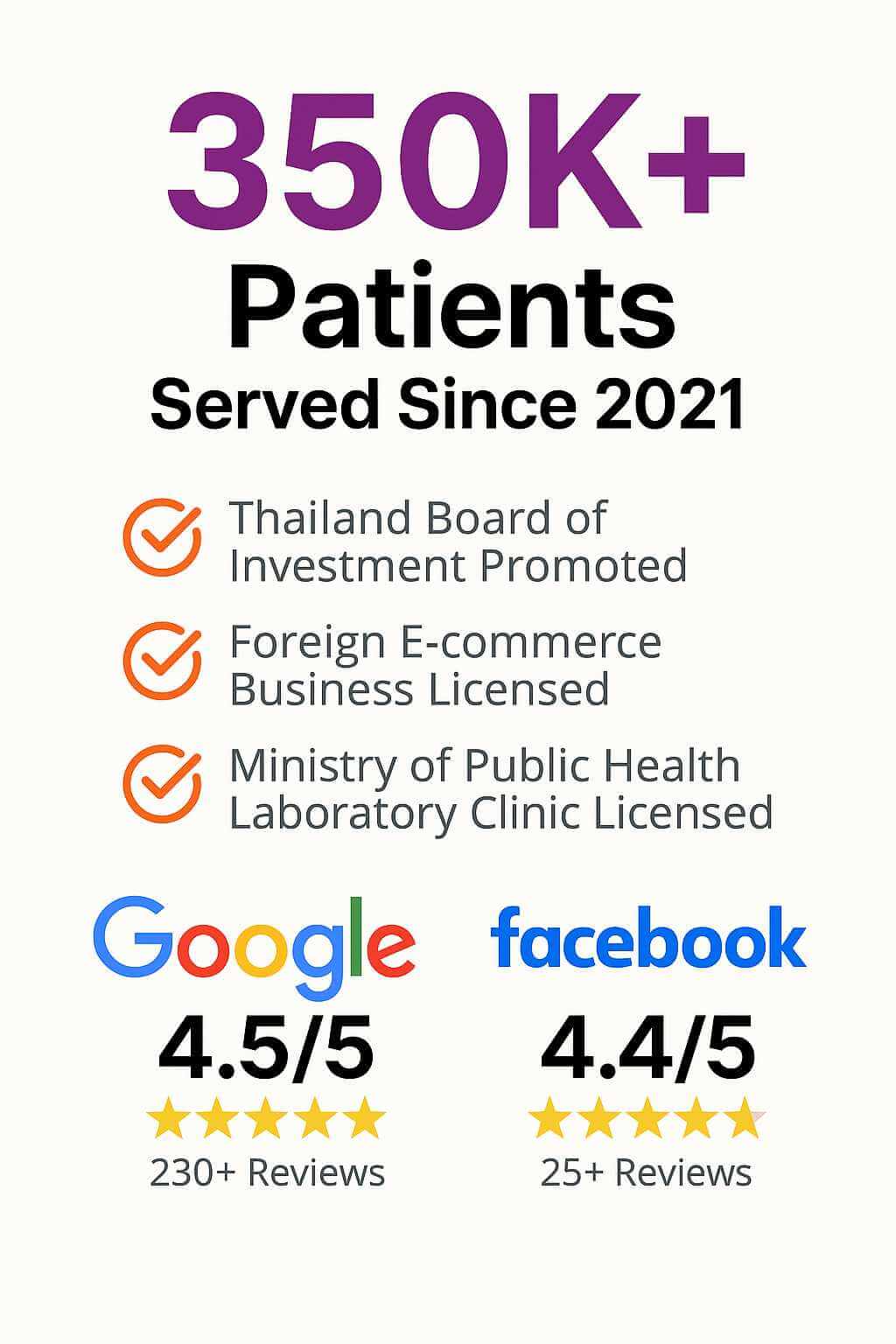
MedEx is a one-stop digital care navigation concierge backed by physical infrastructure, owning the patient experience and decentralizing the care continuum across Asia—integrating provider aggregation, satellite clinics, telemedicine, and at-home care.
© 2020-26 MedEx Ventures Co., Ltd.