No products in the cart.


SEXUAL
HEALTH
MATTERSEXPRESS STD TESTS IN CHIANG MAI & ACROSS THAILAND
HEALTH
MATTERS
BOOK RELIABLE AND ANONYMOUS
EXPRESS STD TESTS IN CHIANG MAI & ACROSS THAILAND
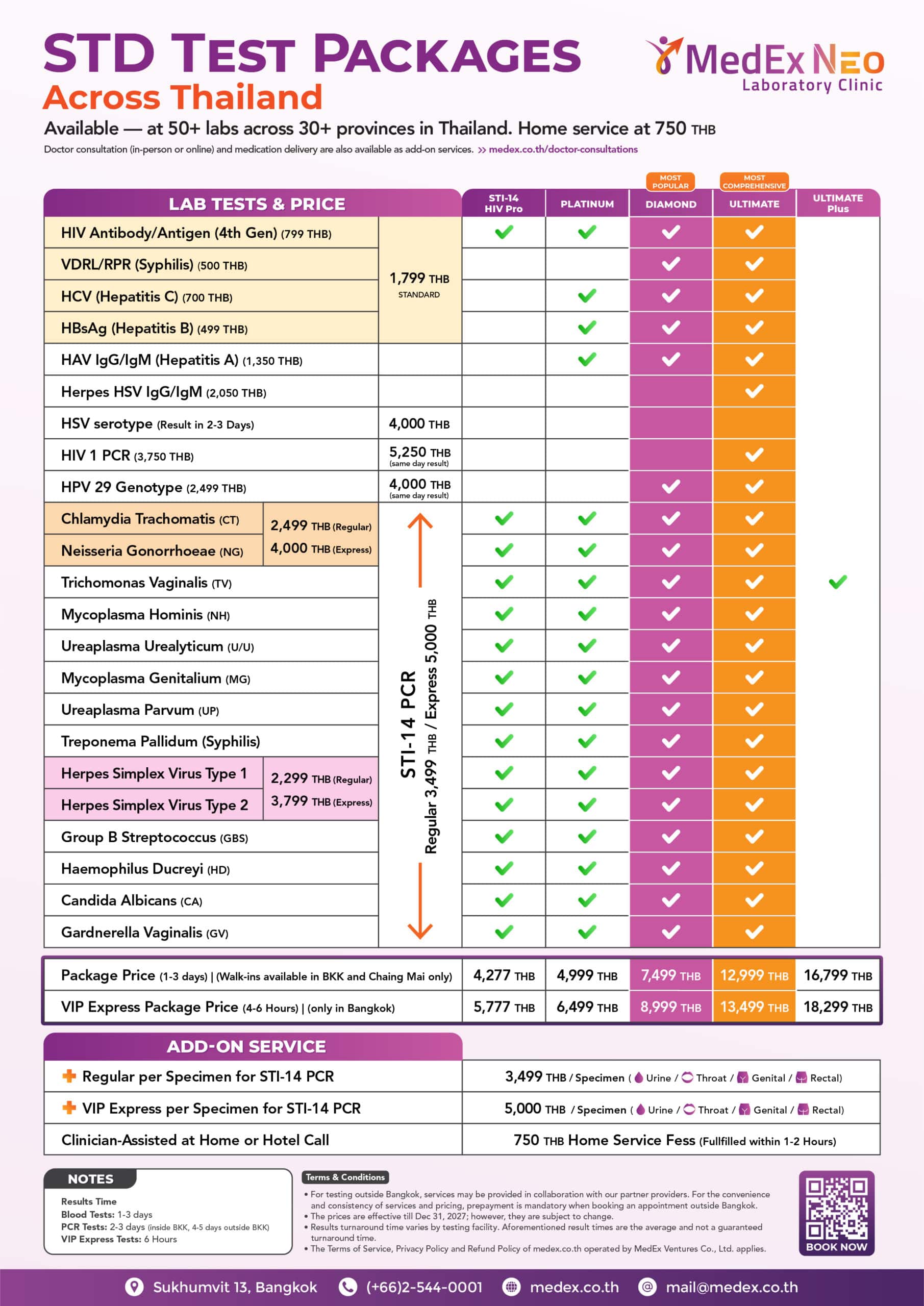
Get STD Test At Home or Visit 50+ Labs and Clinics
Home Test Fulfilled in 1-2 Hours. Instant Doctor Consult and Treatment. 100% Private and Anonymous.
Fast HIV and STI -14 PCR Test Results
Walk-in to MedEx Neo Clinic, Business Park, 114/18, Chiang Mai
8 AM – 6 PM
(5 minutes drive from Chiang Mai Bus Terminal 3)
✨ Test at Home or Hotel: Walk-in, Visit with an Appointment or Get Clinicians at Home within 1-2 Hours
✨ Completely Anonymous: Passport and Identity Disclosure are Optional
✨ RT-PCR/NAAT Methods: Earliest STIs detection with PCR with the Highest Sensitivity and Specificity
✨ Available Nationwide: Coverage in Bangkok, Phuket, Pattaya, Chiang Mai, Samui & 30+ Provinces
Multiple Test Centers & Home Test Seamless Testing Experience Easy to Read Results in English Emailed Same-Day & Flexible Appointments Test for Any STD Tests Available in Thailand Express Results for STI-14 PCR in 6 Hours